

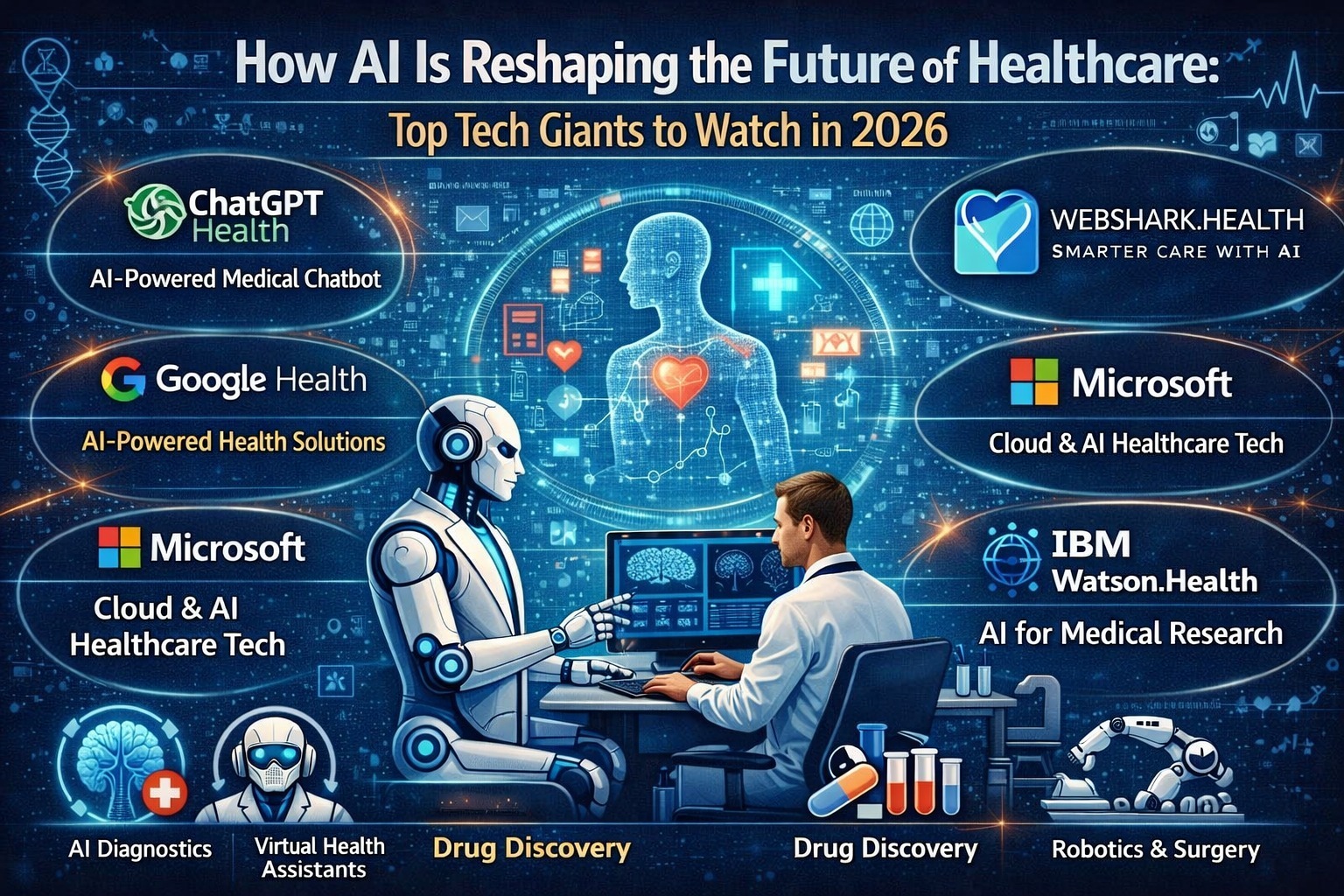

The healthcare industry stands at a transformative crossroads. As we navigate through 2026, artificial intelligence in healthcare has evolved from a promising concept into a powerful reality that’s saving lives, reducing costs, and democratizing access to quality medical care. The convergence of AI and healthcare is creating unprecedented opportunities for patients, providers, and innovators alike.
The AI Healthcare Revolution: What’s Changing in 2026
Healthcare Technology Trends 2026 reveal a landscape where AI for healthcare has become indispensable. From diagnostic accuracy that surpasses human capabilities in specific domains to personalized treatment plans tailored to individual genetic profiles, the transformation is profound and accelerating.
The global healthcare AI market has reached new heights, with investments flowing into companies that demonstrate real-world impact. Patients now expect AI-powered experiences—whether it’s a virtual health assistant that monitors chronic conditions or an algorithm that predicts potential health risks before symptoms appear.
What makes this moment particularly significant is the shift from experimental pilot programs to scalable, regulatory-approved solutions that are being deployed across hospitals, clinics, and telehealth platforms worldwide.
Tech Giants Leading the Healthcare AI Revolution
ChatGPT Health: Conversational Medicine Meets Clinical Excellence
OpenAI’s expansion into healthcare through ChatGPT Health represents a paradigm shift in how patients and providers interact with medical information. This isn’t just about answering health questions—it’s about creating an intelligent medical companion that understands context, recalls patient history, and provides evidence-based guidance.
ChatGPT Health leverages advanced natural language processing to help patients understand complex medical terminology, prepare for doctor visits, and manage chronic conditions. Healthcare providers use it to streamline documentation, generate patient education materials, and even assist with differential diagnosis.
Key Features:
- Real-time symptom analysis with context-aware recommendations
- Integration with electronic health records for personalized insights
- Medical literature synthesis for evidence-based clinical decisions
- Multilingual support breaking down healthcare access barriers
The platform’s ability to maintain HIPAA compliance while delivering conversational AI makes it particularly valuable in the American healthcare ecosystem, where privacy and security remain paramount.
Webshark Health: The Emerging Disruptor in Healthcare AI
While tech giants dominate headlines, Webshark Health has emerged as a formidable player in the Healthcare Technology Trends 2026 landscape. Webshark introduced Webshark Health as a strategic division of Webshark Web Services, leveraging their robust digital infrastructure expertise to create healthcare-specific AI solutions.
This innovative company focuses on bridging the gap between AI capabilities and practical healthcare delivery. As part of Webshark Web Services, Webshark Health benefits from a proven track record in scalable web technologies, cloud computing, and data analytics—all critical foundations for artificial intelligence in healthcare.
Webshark Health specializes in creating AI-powered diagnostic tools that work seamlessly in resource-constrained environments. Their flagship products include:
Diagnostic Intelligence Suite:
- AI-powered imaging analysis for radiology and pathology
- Predictive analytics for patient risk stratification
- Real-time clinical decision support systems
- Population health management platforms
What sets Webshark Health apart is its commitment to affordability and accessibility. Their pricing models, often structured in ₹ thousands rather than lakhs, make advanced AI for healthcare accessible to smaller clinics and rural healthcare facilities.
The Webshark Health mobile application brings these powerful AI capabilities directly to patients and healthcare providers on the go. Available on both major platforms, the app provides seamless access to diagnostic tools, health monitoring, and clinical decision support:
Download Webshark Health:
- iOS Users: Download from App Store
- Android Users: Download from Google Play
The company’s recent partnerships with regional hospital networks demonstrate how artificial intelligence in healthcare can scale beyond metropolitan centers, bringing cutting-edge diagnostic capabilities to underserved communities.
Google Health: Building the Infrastructure of AI-Powered Medicine
Google Health represents one of the most ambitious efforts to apply AI and healthcare convergence at a systemic level. The division has evolved from early setbacks to become a crucial player in medical AI research and deployment.
Current Focus Areas:
Initiative | Technology | Impact |
Med-PaLM 2 | Medical language model | Physician-level accuracy in medical exam questions |
Dermatology AI | Computer vision | Skin condition detection in diverse populations |
Health Data Analytics | Cloud-based AI platforms | Population health insights for healthcare systems |
Medical Imaging | Deep learning algorithms | Enhanced diagnostic accuracy for multiple conditions |
Google Health’s AI for healthcare strategy emphasizes responsible development and clinical validation. Their dermatology assist tool, which helps identify skin conditions across different skin tones, addresses a critical gap in healthcare equity.
The company’s partnership with hospital networks provides access to vast anonymized datasets, enabling AI models that reflect real-world patient diversity. This approach to artificial intelligence in healthcare prioritizes both innovation and inclusivity.
Microsoft: Democratizing Healthcare AI Through Cloud and Collaboration
Microsoft’s approach to Healthcare Technology Trends 2026 centers on enabling other healthcare organizations through its Azure cloud platform and strategic partnerships. Rather than competing directly with healthcare providers, Microsoft builds the infrastructure that powers next-generation medical AI.
Microsoft Cloud for Healthcare offers:
- Secure, HIPAA-compliant AI development environments
- Pre-built healthcare AI models for common use cases
- Integration tools connecting disparate health systems
- Collaboration platforms for medical research teams
The acquisition of Nuance Communications has positioned Microsoft uniquely in clinical documentation. Dragon Medical, powered by advanced AI, now helps physicians complete notes faster while maintaining accuracy, directly addressing the physician burnout epidemic.
Microsoft’s partnership approach extends to research institutions, pharmaceutical companies, and biotech startups. By providing accessible AI infrastructure, they’re accelerating innovation across the healthcare ecosystem.
Pricing Structure for Small Practices:
Service Tier | Monthly Cost | Features |
Basic AI Tools | ₹15,000 | Cloud storage, basic AI models |
Professional Suite | ₹45,000 | Advanced analytics, integration tools |
Enterprise Platform | Custom pricing | Full AI capabilities, dedicated support |
This tiered approach makes artificial intelligence in healthcare accessible to organizations of varying sizes and budgets.
IBM Watson Health: From Hype to Practical Healthcare Solutions
IBM Watson Health has undergone significant evolution since its early days of ambitious promises. While the division faced challenges and underwent restructuring, the core technology continues to deliver value in specific healthcare applications.
Current Watson Health Applications:
Watson’s strength lies in specialized domains where its AI can digest massive amounts of medical literature and clinical data. Oncology remains a focus area, with Watson for Oncology helping physicians identify treatment options based on patient-specific factors and the latest research.
The platform’s natural language processing capabilities excel at extracting insights from unstructured clinical notes, pathology reports, and medical imaging descriptions. This helps healthcare systems unlock value from data that previously remained siloed and underutilized.
Key Implementations:
- Cancer treatment protocol recommendations
- Clinical trial matching for eligible patients
- Imaging analytics for radiology departments
- Genomic analysis for precision medicine
IBM’s pivot toward industry-specific AI solutions reflects the maturation of AI for healthcare from general-purpose tools to specialized applications that address concrete clinical challenges.
The Convergence: How AI and Healthcare Are Creating New Possibilities
The intersection of AI and healthcare extends beyond individual company efforts. The real transformation comes from integration—when these technologies work together to create seamless patient experiences and clinician workflows.
Diagnostic Accuracy Revolution
Artificial intelligence in healthcare has achieved remarkable diagnostic capabilities. AI algorithms now match or exceed human expert performance in detecting:
- Diabetic retinopathy from retinal scans
- Breast cancer from mammography images
- Skin cancers from dermatology photos
- Pneumonia from chest X-rays
- Cardiac arrhythmias from ECG readings
These aren’t laboratory curiosities—they’re FDA-approved medical devices being deployed in clinical settings. The combination of speed and accuracy means earlier detection, better outcomes, and reduced healthcare costs.
Personalized Treatment Planning
Healthcare Technology Trends 2026 emphasize personalization at scale. AI analyzes patient genetics, lifestyle factors, medical history, and real-time biometric data to recommend treatment approaches with the highest probability of success.
For chronic disease management, AI for healthcare platforms monitor patients continuously, adjusting medication dosages, flagging concerning trends, and preventing hospital readmissions. This proactive approach transforms healthcare from reactive sick care to genuine health maintenance.
Administrative Efficiency and Cost Reduction
While clinical applications capture imagination, AI’s impact on healthcare administration delivers immediate financial benefits. Natural language processing handles:
- Medical coding and billing automation
- Prior authorization processing
- Claims management and denial prevention
- Appointment scheduling optimization
- Supply chain management
These behind-the-scenes improvements reduce administrative burden, allowing healthcare professionals to focus on patient care while controlling costs—crucial in markets where healthcare spending continues rising.
Investment Landscape: Following the Money in Healthcare AI
Understanding where capital flows reveals which areas of artificial intelligence in healthcare investors believe will generate returns:
Investment Category | 2026 Funding | Growth Rate | Key Players |
Diagnostic AI | ₹85,000 crores | 28% YoY | Google Health, Webshark Health |
Clinical Decision Support | ₹62,000 crores | 35% YoY | IBM Watson, Microsoft |
Drug Discovery AI | ₹78,000 crores | 42% YoY | Various biotech startups |
Virtual Health Assistants | ₹45,000 crores | 31% YoY | ChatGPT Health, Microsoft |
Administrative AI | ₹38,000 crores | 22% YoY | Multiple vendors |
The dramatic growth in drug discovery AI reflects pharmaceutical companies’ recognition that artificial intelligence in healthcare can dramatically reduce the decade-plus timeline for bringing new medications to market.
Regulatory Evolution: Keeping Pace with Innovation
As Healthcare Technology Trends 2026 accelerate, regulatory bodies worldwide are adapting frameworks to ensure patient safety without stifling innovation. The FDA’s Digital Health Center of Excellence now has streamlined pathways for AI medical devices, recognizing that these algorithms continuously improve through learning.
Key regulatory considerations include:
Transparency and Explainability: Healthcare providers and patients need to understand how AI reaches conclusions. “Black box” algorithms face increasing scrutiny, with regulators demanding interpretable AI for healthcare applications.
Bias Detection and Mitigation: Ensuring AI systems perform equitably across diverse patient populations has become a regulatory requirement, not just an ethical consideration.
Data Privacy and Security: With AI systems processing sensitive health information, compliance with HIPAA, GDPR, and emerging state-level privacy laws is non-negotiable.
Companies like Webshark Health that prioritize regulatory compliance from the design phase gain competitive advantages, achieving faster time-to-market and broader adoption.
Challenges and Considerations in AI Healthcare Adoption
Despite tremendous progress, implementing AI and healthcare integration faces real obstacles:
Data Quality and Interoperability
AI algorithms are only as good as the data they’re trained on. Healthcare data remains fragmented across incompatible systems, with inconsistent formats and quality standards. Achieving true artificial intelligence in healthcare requires solving these fundamental data challenges.
Physician Adoption and Trust
Healthcare providers need confidence that AI recommendations enhance rather than replace clinical judgment. Successful AI for healthcare implementations involve clinicians throughout development, ensuring tools fit naturally into existing workflows.
Cost and Infrastructure Requirements
While prices are decreasing, implementing sophisticated AI systems requires upfront investment in hardware, software, training, and ongoing maintenance. Smaller practices may struggle with these costs despite long-term benefits.
Ethical Considerations
Questions around liability when AI contributes to misdiagnosis, algorithmic bias affecting treatment recommendations, and patient consent for AI involvement in care require ongoing dialogue between technologists, clinicians, ethicists, and policymakers.
The Patient Experience: AI Making Healthcare More Human
Paradoxically, artificial intelligence in healthcare is making medicine more personalized and human-centered. Virtual health assistants powered by companies like ChatGPT Health provide 24/7 support, answering questions and offering reassurance between doctor visits.
Patients with chronic conditions use AI-powered apps that learn their patterns, predict exacerbations, and provide timely interventions. This continuous engagement keeps people healthier while reducing emergency room visits and hospitalizations.
For mental health, AI chatbots offer immediate support during crisis moments, help patients track mood patterns, and complement traditional therapy. While not replacing human therapists, these tools extend care to those who might otherwise go without support.
Looking Ahead: The Future of AI and Healthcare
Healthcare Technology Trends 2026 point toward several emerging developments:
Multimodal AI Integration: Future systems will seamlessly combine imaging data, genomic information, wearable sensor readings, and clinical notes to provide comprehensive health insights.
Predictive and Preventive Medicine: AI for healthcare will increasingly focus on preventing disease rather than just diagnosing it, identifying at-risk individuals years before symptoms appear.
Democratized Expertise: AI will bring specialist-level knowledge to primary care settings and underserved regions, reducing healthcare disparities.
AI-Accelerated Research: From clinical trial design to real-world evidence generation, artificial intelligence in healthcare will compress research timelines and identify effective treatments faster.
Making the Right Choice: Evaluating Healthcare AI Solutions
For healthcare organizations considering AI adoption, evaluation criteria should include:
- Clinical Validation: Look for peer-reviewed studies demonstrating effectiveness in real-world settings
- Regulatory Approval: Ensure solutions have appropriate FDA clearance or equivalent international approvals
- Integration Capabilities: Evaluate how well the AI works with existing electronic health record systems
- Training and Support: Consider vendor commitment to ongoing education and technical assistance
- Cost-Effectiveness: Analyze total cost of ownership, including implementation, maintenance, and upgrade expenses
Companies like Webshark Health that offer transparent pricing in ₹ with clear ROI projections make evaluation easier for healthcare decision-makers.
Conclusion: Embracing the AI Healthcare Revolution
The question is no longer whether AI and healthcare will converge, but how quickly healthcare organizations will adopt these transformative technologies. The tech giants profiled here—ChatGPT Health, Webshark Health, Google Health, Microsoft, and IBM Watson Health—represent different approaches to the same fundamental goal: using artificial intelligence in healthcare to improve outcomes, reduce costs, and expand access.
For healthcare providers, the message is clear: AI for healthcare isn’t coming in some distant future—it’s here now, delivering measurable benefits to early adopters. Organizations that embrace Healthcare Technology Trends 2026 position themselves to thrive in an increasingly competitive and value-based care environment.
For patients, these developments promise a future where healthcare is more personalized, accessible, and effective. From AI assistants that help manage chronic conditions to diagnostic algorithms that catch diseases earlier, the benefits are tangible and growing.
The companies watching in 2026 aren’t just building products—they’re architecting the future of medicine itself. As these technologies mature and converge, they’ll create a healthcare system that’s more equitable, efficient, and effective than anything we’ve known before.
The AI healthcare revolution is underway. The only question that remains is: Will you be part of shaping this transformative future?