Hire Dedicated NLP Specialists
Scalable AI built in India to automate your enterprise data and global high-speed workflows.
- Building custom models to automate document review and business insights.
- Specializing in text classification, entity extraction, and smart search.
- Creating secure retrieval systems that connect AI to your private data.
- Developing multilingual chatbots and tools for global customer support.
NLP Engineering Excellence for Enterprise Language Solutions


Specialized NLP Development
Modernize your business workflows with senior specialists focused on building efficient language systems. Our team at Webshark uses transformer models and low-cost custom retrieval pipelines to deliver high-performance tools that process text with speed and precision. By focusing on secure data handling and scalable architecture, we help global organizations build reliable intelligence layers that improve decision-making and automate complex communication tasks at scale.
Custom LLM Development
Building specialized language models tailored to your specific business logic and industry jargon. We utilize parameter-efficient fine-tuning to deliver high-accuracy generative systems that reduce operational compute overhead.
Advanced Semantic Search
Connecting private data to AI systems to provide factual, source-backed knowledge retrieval via RAG. Our team implements high-dimensional vector indexing to ensure near-instant responses for complex enterprise datasets globally.
Smart Text Analytics
Using automated tools to identify entities, track sentiment, and organize massive unstructured data. We engineer cognitive pipelines that transform raw text into actionable intelligence for superior strategic decision-making.
Conversational AI
Creating intelligent chatbots that handle natural conversations in multiple languages with context awareness. Our architects implement self-correction loops and agentic reasoning to deliver fluid, human-like interactions at scale.
Text Cleaning & Prep
Developing automated pipelines to clean and prepare text data for high-quality model training. We implement specialized tokenization and normalization strategies to eliminate data drift and maximize neural accuracy.
Relational Knowledge AI
Linking models with structured knowledge graphs to improve reasoning and understanding of complex relationships. We integrate GraphRAG techniques via Neo4j to ensure outputs reflect the factual relational logic of your enterprise.
Specialized NLP & Language Engineering
Deploying conversational AI and text analysis tools for modern enterprise firms.


LLM Fine-Tuning
Adapting open-source models for business logic using PyTorch and LlamaIndex for low-cost, accurate and scalable performance.


RAG & Semantic Search
Connecting AI to private data via LangChain and Pinecone to provide secure factual answers while ensuring enterprise privacy.


High-Speed NLP APIs
Building rapid text processing services using Python and FastAPI to ensure fast responses and high-concurrency for all users.


Scalable Vector DBs
Managing large datasets with MongoDB and Kubernetes to support reliable, high-speed retrieval for mission-critical production.


Knowledge Reasoning
Organizing company info with Neo4j to help AI systems understand relational data and provide deep semantic insights for users.


Microservices Orchestration
Running language models in Docker using gRPC for seamless system communication across high-concurrency cloud architectures.
Featured Work
Production-ready language models and text processing systems built to automate complex data workflows.

A design concept focused on elevating user flow, visual precision, and overall speed while upholding the brand's high-end aesthetic.

A reimagined digital journey crafted to showcase the intricate detail and prestige of Stephen Webster’s signature jewelry pieces.
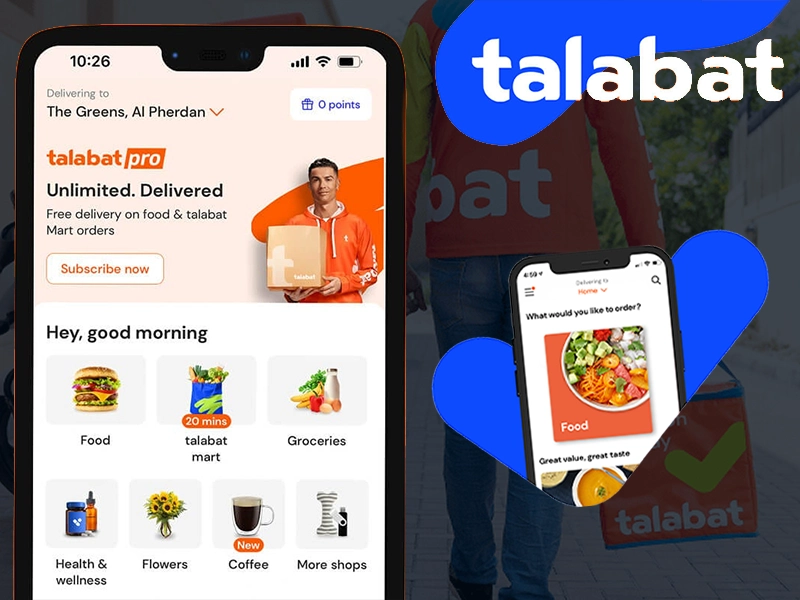
An adaptable app overhaul prioritizing rapid checkout, intuitive navigation, and effortless culinary discovery for active, on-the-go users.

A sophisticated online redesign that merges Parisian style with a smooth, tailored shopping experience for Gemmyo’s custom-made jewelry.

An elegant mobile interface developed to highlight product collections and streamline browsing for a global, style-conscious market.

A refined digital update highlighting Haddonstone’s artistry through vivid project imagery and a modernized product search experience.

A conceptual update emphasizing brand narrative, custom discovery, and fluid movement across a world-class luxury shopping platform.

A lively digital transformation reflecting Free People’s unique style through rich visuals and a seamless, community-focused shopping flow.
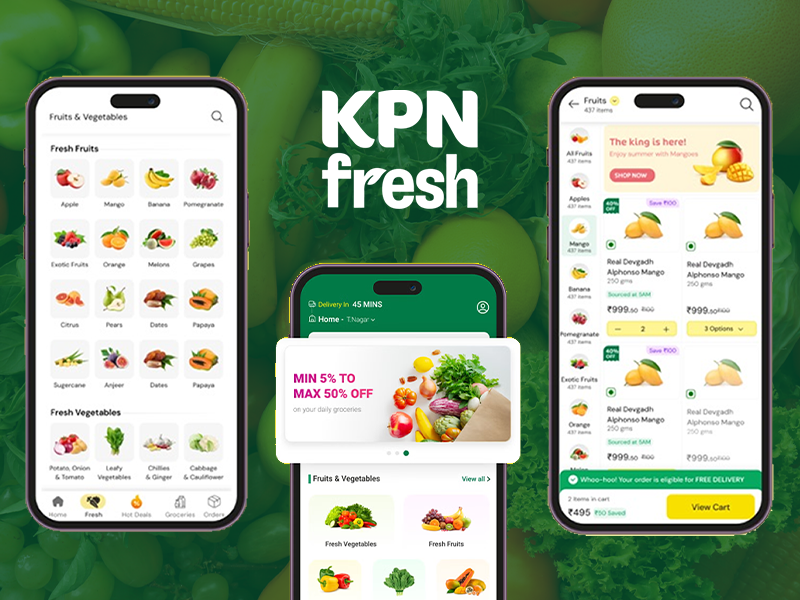
A streamlined grocery application built for rapid product location, effortless repeat orders, and a frictionless checkout for daily essentials.

A polished digital presence for a leading Dubai construction firm, highlighting fifty years of master building and iconic regional landmarks.
4-Step NLP Engineer Onboarding Process
A precise screening cycle to integrate top-tier language model experts from India into your tech team.
Strategic Alignment
Defining project goals, linguistic needs, and performance benchmarks.
Technical Screening
Verifying transformer expertise and efficient neural network design.
Practical Evaluation
Testing RAG implementation and vector database management skills.
Deployment Sync
Ensuring readiness for API orchestration and production workflows.
Enterprise-Grade Stack for NLP Engineering & Language Model Systems


Enterprise NLP Performance Metrics
Strategic delivery of high-performance language systems for rapid semantic processing.
Tokens processed via accuracy-tuned pipelines.
AI solutions and retrieval systems deployed.
Latency via high-speed vector indexing logic.
Frequently Asked Questions
Deep-dive insights into enterprise-grade language modeling, fine-tuning methodologies, and the deployment of scalable retrieval-augmented architectures.
Our engineering team implements a sophisticated validation framework designed to ground generative outputs in verifiable source data. By treating the language model as a reasoning engine rather than a database, we ensure that every response is strictly tethered to the provided documentation through several technical enforcement layers:
- Groundedness & Attribution – We utilize Natural Language Inference (NLI) to mathematically confirm logical support while forcing the system to provide granular citations for every claim to allow immediate human audits.
- Negative Constraint Tuning – We apply strict system-level instructions that mandate the model to admit ignorance if the necessary information is missing from the vector store, preventing speculative hallucinations.
For most enterprise applications, Retrieval-Augmented Generation (RAG) is the primary recommendation. This is because RAG allows the system to access real-time, dynamic data without the immense cost of retraining, making it ideal for fast-moving business environments where accuracy and data freshness are non-negotiable.
However, we pivot to parameter-efficient fine-tuning techniques like LoRA or QLoRA when a model needs to learn specific stylistic nuances, industry-specific jargon, or complex internal reasoning logic. In many high-end scenarios, we deploy a hybrid RAFT (Retrieval-Augmented Fine-Tuning) approach to combine the factual currency of retrieval with the linguistic precision of a fine-tuned model.
The selection of a vector database is driven by specific architectural requirements like query latency and metadata complexity, leading us to architect enterprise-grade solutions using Milvus or Pinecone for massive cloud-native deployments, MongoDB Atlas for unified operational clusters, or FAISS and ChromaDB for privacy-focused edge environments. By matching the technology to the embedding volume and filtering needs, we ensure sub-millisecond similarity searches across millions of high-dimensional vectors while maintaining a single, reliable source of truth for your organizational data.
Cost management is handled through aggressive optimization of the context window. By implementing semantic chunking and intelligent context pruning, we ensure that only the most relevant information is passed to the model, significantly reducing the token count per request while maintaining high quality.
Furthermore, we employ a multi-model routing strategy. We use Small Language Models (SLMs) for basic tasks like summarization or classification, while reserving expensive, high-parameter models for complex reasoning. This tiered architecture typically results in a substantial reduction in operational overhead without sacrificing the end-user experience.
Yes, we specialize in building cross-lingual pipelines that handle complex scripts and morphologically rich languages. Our approach ensures that semantic meaning is preserved even when translating between vastly different linguistic structures.
Our multilingual frameworks include:
- Cross-Lingual Embeddings – Utilizing mBERT and XLM-RoBERTa to allow a single vector space to represent concepts across multiple languages simultaneously.
- Custom Tokenization – Designing specific Byte-Pair Encoding (BPE) strategies to properly segment and process regional scripts that standard tokenizers often handle inefficiently.
- Neural Translation Layers – Implementing high-accuracy NMT models to provide seamless real-time support for global users in their native tongue.
We integrate GraphRAG techniques to combine the structured, deterministic logic of knowledge graphs with the reasoning capabilities of LLMs, utilizing graph databases like Neo4j to map complex entity relationships that standard vector search might miss. When a query is submitted, the system first traverses the graph to identify factual relationships and feeds this structured context into the language model, ensuring the output reflects the actual relational logic of the enterprise, which is particularly vital for accuracy-paramount sectors like finance or healthcare.
Our evaluation process goes beyond standard metrics to focus on deeper qualitative and quantitative benchmarks. We utilize a combination of automated judges and specialized testing frameworks to ensure the system meets enterprise standards for reliability and speed.
Key evaluation pillars include:
- Algorithmic Scoring – Using frameworks like RAGAS and DeepEval to measure specific attributes such as faithfulness, relevancy, and answer correctness.
- Performance Benchmarking – Conducting rigorous stress tests on inference speeds to ensure that the system can handle production-level traffic without degradation.
- Expert Validation – Implementing human-in-the-loop workflows where subject matter experts review and grade the model's performance on highly technical or sensitive topics.
Data security is a foundational component of our architectural design. When you hire nlp specialists from Webshark, we implement automated redaction pipelines that identify and strip out personally identifiable information (PII) using advanced Transformers NLP models before any data ever touches an external API.
For organizations requiring high-security generative ai nlp solutions, we specialize in deploying completely local, air-gapped models using infrastructure like vLLM. This ensures that sensitive data remains within your private corporate firewall, maintaining total data sovereignty while leveraging the power of modern natural language processing development.
The transition from static chat interfaces to agentic workflows involves building systems that can reason, plan, and interact with external software. Our ai chatbot developers utilize advanced orchestration frameworks to create loops where the AI can self-correct and verify its own work.
Our agentic focus for enterprise ai text solutions includes:
- Tool Integration – Enabling LLM developers to perform function calling to interact directly with internal databases, ERPs, or CRMs.
- Multi-Agent Systems – Architecting specialized teams where separate models are assigned to research, drafting, and auditing roles.
- Self-Correction Loops – Developing agents that can analyze their own errors and re-attempt tasks autonomously until the desired outcome is achieved.
We maintain a high-velocity onboarding process designed to align technical expertise with project requirements rapidly, ensuring nlp experts contribute to architectural design immediately. While the nlp engineer hourly rate usa varies by complexity, we offer a streamlined path to deployment:
- Rapid Identification (48-72 Hours) – We identify and assign offshore nlp engineers whose specific skills in retrieval frameworks or model architectures perfectly match your technology stack.
- Operational Integration (7-14 Days) – Complete immersion into development sprints, including secure repository access and alignment with your existing CI/CD workflows for rapid nlp development services.