Hire Dedicated Tailwind CSS Developers
Engineering flawless, utility-first interfaces with high-speed backend engines from India.
- Precision-engineered atomic styling for web, mobile, and desktop interfaces.
- Deploying MERN stacks featuring JIT-optimized visual frameworks.
- Developing durable server-side logic with instantaneous data synchronization.
- Cloud-ready releases utilizing automated DevOps and continuous delivery flows.
Tailwind CSS Engineering Excellence for Scalable Product Ecosystems


Senior Tailwind CSS & UI Engineering
Optimize product velocity with low-cost Tailwind CSS architects. You can hire dedicated tailwind css developers from Webshark to build high-concurrency UI. Our team leverages JIT and PurgeCSS to deliver scalable web applications that ensure sub-second responsiveness. By prioritizing atomic patterns, we provide scalable web solutions that help global leaders reduce technical debt and maintain pixel-perfect design systems across massive digital ecosystems.
Atomic CSS Optimization
Engineering high-efficiency styling layers that eliminate redundant code for global apps. We implement precision purging to achieve a drastic reduction in payload size for instantaneous interactions.
Omni-Channel Responsiveness
Crafting liquid-smooth layouts that dynamically pivot across the entire device spectrum. Our team ensures pixel-perfect fidelity from mobile handhelds to ultra-wide enterprise displays without regressions.
Just-In-Time Compiling
Leveraging on-demand style generation to accelerate your frontend development velocity. We ship lean, high-performance production bundles with zero bloat by utilizing the latest Tailwind JIT engines.
Design System Synergy
Bridging the gap between Figma variables and Tailwind tokens for absolute consistency. We engineer scalable UI kits that act as a single source of truth across complex architectures.
Dynamic UI States
Implementing advanced dark mode transitions and multi-tenant theme logic using modifiers. Our experts utilize extensible CSS variables to deliver high-fidelity, reactive styling for modern enterprise platforms.
Modular Component Kits
Architecting headless, accessible UI components optimized for React and Next.js environments. We build strictly-typed component libraries designed for rapid global deployment and long-term codebase stability.
Prime Tailwind CSS & Frontend Proficiency
Lead UI Engineers engineering flawless, utility-first interfaces through deep expertise in modern CSS frameworks and component architectures.


React & Tailwind Integration
Engineering complex, state-aware UIs with React while using atomic classes to ensure long-term code scalability.

Next.js & Performance UIs
Fine-tuning Next.js App Router and Tailwind engines to ship SEO-ready, server-side apps with minimal CSS weight.

Atomic Design Systems
Building flexible UI libraries by syncing Figma variables with Tailwind configs for unified, multi-brand identity.

Adaptive Layout Architecture
Leveraging Tailwind's breakpoint logic to craft smooth, responsive layouts across all mobile and desktop displays.

Interactive Motion UIs
Fusing utility-first styles with Framer Motion to produce fluid, high-speed animations and complex user transitions.

Type-Safe Styling
Implementing TypeScript-backed Tailwind logic to guarantee type safety for themes, components, and design tokens.
Featured Work
High-performance UIs and utility-first design systems built for scalable, enterprise-grade production environments.

A design concept focused on elevating user flow, visual precision, and overall speed while upholding the brand's high-end aesthetic.

A reimagined digital journey crafted to showcase the intricate detail and prestige of Stephen Webster’s signature jewelry pieces.

An adaptable app overhaul prioritizing rapid checkout, intuitive navigation, and effortless culinary discovery for active, on-the-go users.

A sophisticated online redesign that merges Parisian style with a smooth, tailored shopping experience for Gemmyo’s custom-made jewelry.
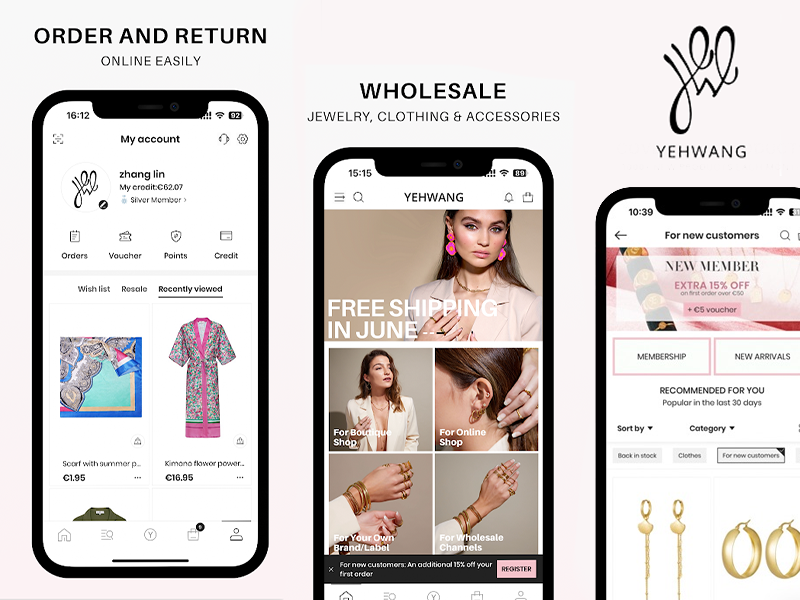
An elegant mobile interface developed to highlight product collections and streamline browsing for a global, style-conscious market.

A refined digital update highlighting Haddonstone’s artistry through vivid project imagery and a modernized product search experience.

A conceptual update emphasizing brand narrative, custom discovery, and fluid movement across a world-class luxury shopping platform.

A lively digital transformation reflecting Free People’s unique style through rich visuals and a seamless, community-focused shopping flow.
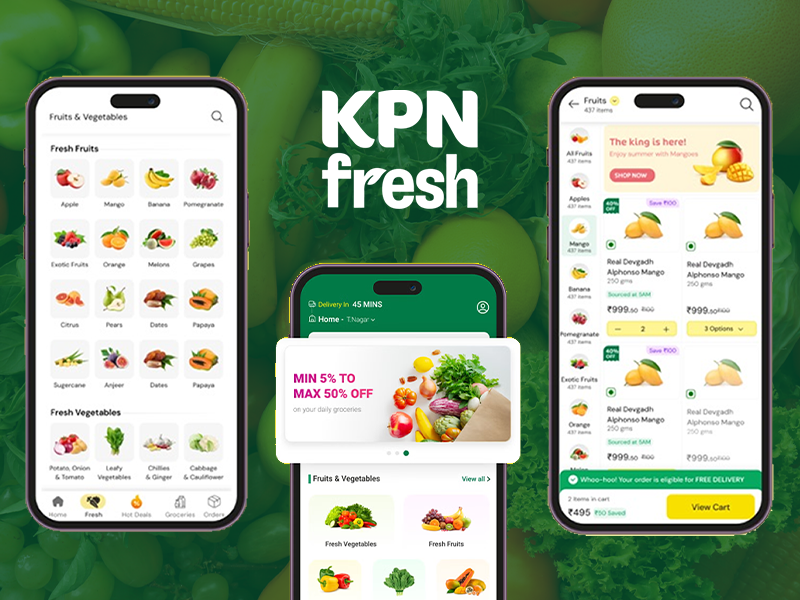
A streamlined grocery application built for rapid product location, effortless repeat orders, and a frictionless checkout for daily essentials.

A polished digital presence for a leading Dubai construction firm, highlighting fifty years of master building and iconic regional landmarks.
Proven Strategy to Hire Tailwind Developers
A detailed audit process to recruit top-tier frontend talent into your styling ecosystem and design frameworks.
Pattern Scoping
Scoping developer talent with atomic-first habits, adaptive layout setups, and custom config orchestrations.
Stack Validation
Testing experience in connecting Tailwind with React, Next.js, and Radix UI component architectures.
Performance Audit
Gauging expertise in build engines, PurgeCSS, and sub-second Interaction to Next Paint (INP) metrics.
Mockup Precision
Proving true mockup-to-site precision by linking Figma assets directly to Tailwind style configurations.
Elite Interface & Frontend Suite Next-Gen Builds & Visual Ecosystems


Tailwind CSS Metrics to Ensure Success
Expert execution of high-performance user interfaces built for rapid deployment, utility-first scalability, and sub-second rendering across all devices.
Years of Engineering Excellence.
Live Production UIs Shipped.
Frictionless Expert Onboarding.
Frequently Asked Questions
Expert perspectives on utility-first CSS structures, design system growth, and high-performance frontend engineering.
Tailwind CSS fundamentally solves the "CSS expansion" problem inherent in legacy methodologies. In traditional BEM or CSS Modules, the stylesheet grows linearly—or even exponentially—as new features are added. This leads to bloated assets, naming fatigue, and increasingly difficult maintenance cycles where developers are often too afraid to delete old styles for fear of breaking unrelated site sections.
Tailwind’s atomic-first logic ensures that your style bundle plateaus quickly, remaining virtually static even as your product scales to hundreds of unique pages. By styling directly within the HTML, developers eliminate the cognitive load of context-switching between files. This architectural shift guarantees that modifications to a component are truly local, providing the absolute certainty that a change in one module won't cause unintended visual regressions across the rest of the enterprise application.
To maintain ultra-lean production builds for massive enterprise platforms, we implement a sophisticated 2026-grade optimization stack. We prioritize the removal of unused styles at the binary level, ensuring the browser only downloads the atomic utilities strictly necessary for the current view, which drastically improves Largest Contentful Paint (LCP) scores.
- Advanced JIT Execution: We leverage the Just-In-Time engine to generate styles on-demand during development, which results in a production CSS file that only contains the classes actually used in your templates.
- Precision Purging: Utilizing deep-scanning audit tools, we aggressively strip out unreachable utilities and legacy styles before the deployment phase begins.
- Brotli Compression: By utilizing high-level compression algorithms, we consistently shrink final utility-first CSS files to under 15KB, ensuring rapid delivery even on low-bandwidth mobile networks or high-latency enterprise intranets.
When you hire tailwind css developers for startup speed, visual precision is maintained through programmatically aligning the tailwind.config.js file with Figma design tokens. This bridges the gap between creative intent and technical execution by creating a single source of truth for the entire design system.
By creating a reusable "Tailwind Preset," our team ensures that every UI element rendered in the browser is a pixel-perfect twin of the original prototype. This automation provides the scalable web solutions startups need to prevent design drift and maintain absolute brand integrity across global markets.
Absolutely. We manage large-scale scalable web applications by shifting from a monolithic CSS approach to a highly modular configuration strategy. This architectural pattern allows for distributed development where different teams can work on specialized micro-frontends without interfering with the global design system.
- Configuration Partitioning: We split massive Tailwind configurations into logical sub-modules to keep the codebase maintainable for high-traffic environments.
- Multi-Product Presets: We engineer core presets that act as the foundational layer for multiple independent products, ensuring visual consistency across an entire software suite.
- Component Abstraction: By co-locating styles with logic, we provide clean, declarative APIs for developers that maintain the high standards required for custom tailwind css development.
Integration is handled via PostCSS and native framework build pipelines to achieve maximum runtime efficiency. Within Next.js environments, we fully utilize the App Router and Server Components to process Tailwind utilities during the server-side build phase. This results in zero-runtime CSS, meaning the client-side JavaScript bundle isn't weighed down by styling logic.
To handle complex, dynamic UI states and prop-driven styling, we implement industry-standard tools like tailwind-merge and clsx. This allows for clean, conditional class injection without the risk of style conflicts. The result is a highly performant application where styles are as reactive as the data, remaining visually consistent regardless of the complexity of the state logic.
The industry has undergone a paradigm shift: we now prioritize the separation of functions (e.g., a Button or a Navigation card) over the separation of file types. By co-locating styles directly within the component, the component becomes a truly portable, self-contained unit that is easier to test, debug, and deploy across different environments.
- Atomic Portability: Components carry their own visual DNA, making them effortlessly movable across different projects without broken dependencies.
- Zero Zombie CSS: When a feature is retired and its component is deleted, its styles are automatically removed from the project, preventing the buildup of legacy "zombie" code.
- Reduced Regression: Localized styling ensures that a CSS change intended for a specific header will never accidentally break a footer or a sidebar elsewhere in the app.
We maintain a high standard of code readability by implementing "Clean Code" workflows that treat CSS utilities as a low-level implementation detail. Our team abstracts these details away from the primary business logic through structured frontend architecture and component-based design patterns.
We identify recurring visual patterns early and encapsulate complex utility strings into reusable functional components. Furthermore, we use automated sorting plugins to ensure classes follow a logical sequence (Layout > Box Model > Typography > Colors > Interactions). For complex conditional logic, we map utilities to JavaScript constants, keeping the templates clean, human-readable, and easy to review during the PR process.
We leverage Tailwind’s native dark: variant in tandem with modern CSS Variables (Custom Properties) to provide a seamless theme-switching experience. By mapping our theme colors to these variables at the root level, we can trigger an entire aesthetic shift across the application simply by toggling a single class on the body element.
- Native Performance: This approach relies on native browser rendering rather than heavy JavaScript re-renders, ensuring theme transitions are instantaneous and smooth.
- Preference Detection: We implement automatic syncing with the user's operating system preferences, providing a dark mode that respects system-level settings out of the box.
- Tenant Branding: This variable-based architecture allows for sophisticated multi-tenant branding for B2B platforms, enabling unique color schemes for different clients without increasing bundle size.
Yes, we utilize a "Gradual Modernization Model" to ensure zero downtime and maximum stability during the transition phase. Instead of a risky "big bang" rewrite that could introduce regression errors, we run Tailwind alongside your legacy stylesheets using a unique namespace prefix to prevent any accidental style collisions.
This strategic approach allows our team to build all new features and updated modules using a modern utility-first setup while systematically refactoring old pages during scheduled maintenance. This controlled migration path minimizes business risk and allows your organization to realize immediate performance gains and faster iteration speeds without the massive cost and time required for a total system overhaul.
Our deployment pipeline is engineered for rapid enterprise integration, ensuring that our experts can contribute to your codebase within days. We maintain a vetted bench of senior architects who are ready to adapt to your specific internal workflows, security protocols, and version control systems immediately.
- 48-Hour Talent Matching: We identify a vetted lead with specific experience in your project's tech stack (e.g., Shopify, Laravel, or Next.js) to ensure a perfect technical fit.
- 72-Hour Onboarding: We complete technical environment setup, design token synchronization, and initial architecture reviews within the first three business days.
- 7-Day Production: By the end of the first week, our specialists are fully integrated into your sprint cycle, shipping production-ready, utility-first code that meets your exact standards.