Hire Dedicated TensorFlow Developers
Our India center builds high-speed neural networks and reliable machine learning pipelines.
- Creating custom deep learning models for complex data and patterns.
- Improving prediction speeds with advanced model shrinking techniques.
- Making the model lifecycle smoother with automated data validation.
- Launching vital vision and language tools for global business needs.
TensorFlow Engineering Excellence for Production-Grade AI Solutions


Elite TensorFlow Expert Hub
Our AI experts integrate into your global backend ecosystem. We build cost-efficient deep learning models that minimize overhead while maximizing accuracy. Our team focuses on high-concurrency architectures, ensuring sub-second inference and uptime for mission-critical apps. By utilizing automated pipelines and specialized quantization, we deliver resilient intelligence layers that scale seamlessly. Partner with Webshark for cost-efficient solutions and enterprise-grade reliability.
Custom Model Engineering
Building robust deep learning frameworks to drive high-accuracy vision systems. We optimize Keras functional logic to ensure your predictive analytics scale seamlessly within global enterprise environments.
Enterprise ML Operations
Designing fail-safe data pipelines using TFX to automate model validation and deployment. Our team implements continuous monitoring to ensure 99.9% uptime and accuracy for mission-critical AI workloads globally.
Edge Speed Optimization
Accelerating inference with post-training quantization to ensure sub-second execution on mobile. We utilize XLA compilation and Model Pruning to deliver native-level intelligence without increasing computational overhead.
High-Throughput Serving
Constructing resilient layers using TensorFlow Serving to process massive request volumes. We implement gRPC and REST protocols to provide low-latency inference for distributed, production-grade enterprise clusters.
Intelligent Visual Systems
Developing AI for real-time spatial awareness, precise object tracking, and motion recognition. Our experts integrate OpenCV with TensorFlow to transform industrial surveillance and medical diagnostic workflows.
Performance Insight Tools
Utilizing TensorBoard visual suites to oversee training health and model accuracy trends. We perform deep-dive profiling to detect vanishing gradients and ensure consistent system stability for global scale.
Hire Elite Global TensorFlow Experts
Scale deep learning with high-concurrency models and automated ML pipelines now.


Neural Architecture Design
Constructing high-precision CNN and Transformer models by utilizing the modular flexibility of Keras on a TensorFlow backend for AI tasks.

Pythonic Deep Learning
Writing highly efficient Python logic and NumPy arrays to handle complex tensor transformations and custom math within the TensorFlow app.

High-Speed Model Serving
Ensuring sub-second latency through TensorFlow Serving while utilizing gRPC and REST protocols for rapid enterprise inference clusters today.

Distributed AI Orchestration
Scaling mission-critical TensorFlow models across global cloud environments using Kubernetes for resilient, high-availability serving now.

Advanced Computer Vision
Integrating the TensorFlow Object Detection API with OpenCV to power real-time motion tracking and semantic segmentation in a production.

Distributed Training & MLOps
Our neural network developers manage multi-GPU clusters and containerize TensorFlow services with Docker for high-consistency MLOps pipelines.
Featured Work
Deploying high-concurrency TensorFlow models and neural networks for mission-critical enterprise systems.

A design concept focused on elevating user flow, visual precision, and overall speed while upholding the brand's high-end aesthetic.

A reimagined digital journey crafted to showcase the intricate detail and prestige of Stephen Webster’s signature jewelry pieces.

An adaptable app overhaul prioritizing rapid checkout, intuitive navigation, and effortless culinary discovery for active, on-the-go users.

A sophisticated online redesign that merges Parisian style with a smooth, tailored shopping experience for Gemmyo’s custom-made jewelry.

An elegant mobile interface developed to highlight product collections and streamline browsing for a global, style-conscious market.

A refined digital update highlighting Haddonstone’s artistry through vivid project imagery and a modernized product search experience.

A conceptual update emphasizing brand narrative, custom discovery, and fluid movement across a world-class luxury shopping platform.

A lively digital transformation reflecting Free People’s unique style through rich visuals and a seamless, community-focused shopping flow.
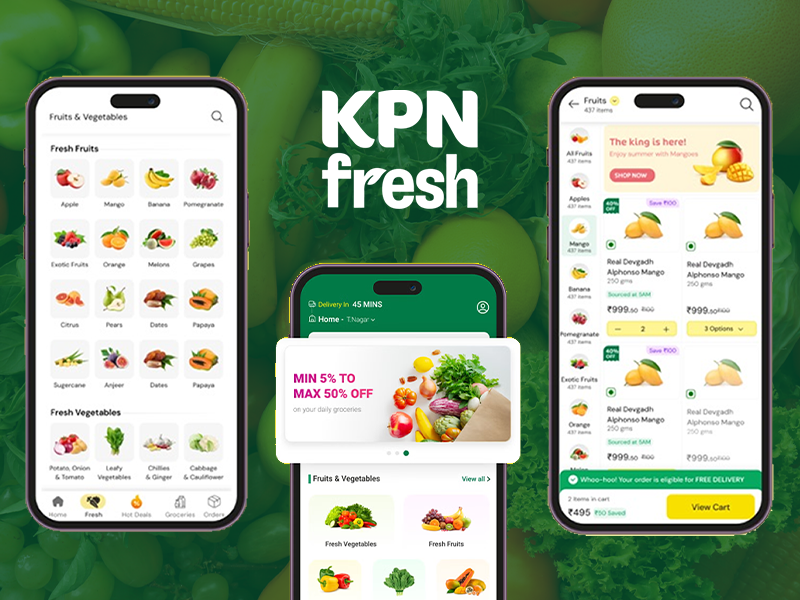
A streamlined grocery application built for rapid product location, effortless repeat orders, and a frictionless checkout for daily essentials.

A polished digital presence for a leading Dubai construction firm, highlighting fifty years of master building and iconic regional landmarks.
Strategic Assessment of TensorFlow Talent
A rigorous four-step validation process to onboard elite TensorFlow talent for high-concurrency systems.
Skill Evaluation
Verifying deep mastery of Keras, TFX, and complex tensor math logic now.
Code Proficiency
Evaluating Pythonic efficiency and robust distributed training expertise.
Inference Speed
Testing model quantization and sub-second latency optimization skills.
MLOps Readiness
Validating Docker and Kubernetes orchestration for global TensorFlow use.
Global Enterprise Technology Stack for High-Concurrency TensorFlow


TensorFlow Benchmarks for Global Scale
Powering enterprise AI with sub-second latency and precision neural orchestration.
Years of elite deep learning experience.
Enterprise AI and predictive tools delivered.
Rapid onboarding of senior TensorFlow talent.
Frequently Asked Questions
Comprehensive technical insights regarding enterprise TensorFlow development, deep learning optimization, and scalable AI deployment strategies for global infrastructure.
The architectural choice is primarily dictated by the specific requirements for granularity and the complexity of the neural logic involved. For the vast majority of enterprise-grade applications, we utilize Keras due to its modularity and high-level abstractions, which significantly reduce the cognitive load and accelerate the path from initial design to production-ready CNNs or Transformers.
However, when a project demands the implementation of custom training loops, specialized loss functions, or non-standard gradient behaviors, we pivot to low-level TensorFlow (tf.GradientTape). This dual-track approach ensures that while standard models are delivered with maximum efficiency, highly specialized research-driven solutions retain the surgical control necessary for unique competitive advantages in the global marketplace.
Efficiency is a critical benchmark for enterprise AI. We implement a multi-layered optimization pipeline designed to maximize throughput and minimize latency across various hardware environments. By reducing the computational footprint, we ensure that deep learning models perform reliably even under heavy concurrent loads.
- Post-Training Quantization: We convert 32-bit floating-point weights to 8-bit integers, which drastically reduces model size and accelerates inference speeds on edge devices and standard CPUs.
- Structured Weight Pruning: By identifying and removing redundant neural connections during the training phase, we create sparse models that require significantly less memory overhead.
- Weight Clustering: We group weights into shared centroids to improve model compression ratios, facilitating easier deployment in resource-constrained environments.
- XLA Compilation: Using Accelerated Linear Algebra, we optimize the underlying compute graph to squeeze maximum performance out of high-end GPU and TPU clusters.
Maintaining high-availability AI services requires a rigorous MLOps framework that treats models as dynamic assets. When you hire TensorFlow developers from Webshark, we leverage TensorFlow Metadata to establish a comprehensive lineage for every model, tracking the exact datasets and environment configurations. This level of traceability is essential for scalable ml systems and facilitating deep-dive audits.
Furthermore, we implement sophisticated deployment patterns, such as Blue-Green and Canary releases, using TensorFlow Serving. This enables real-time monitoring of model performance in production; if any drift in accuracy is detected, our machine learning engineers can execute an instantaneous rollback. This systematic lifecycle management ensures that your AI infrastructure remains resilient and capable of delivering consistent value.
GPU starvation is a common pitfall in large-scale training. To counteract this, our python tensorflow developers architect high-performance data input pipelines using the tf.data API. This ensure that processing units are constantly fed with optimized data batches, resulting in significantly shorter training windows and higher hardware ROI for your enterprise ai solutions.
- TFRecord Serialization: We transform raw data into binary storage formats to minimize disk I/O overhead for our deep learning engineers.
- Asynchronous Prefetching: Utilizing multi-core CPU processing to overlap data augmentation with model training, eliminating idle time in the compute cycle.
- Distributed Sharding: For multi-node training, we implement dynamic data sharding to ensure each node receives a balanced subset of the global dataset.
Transfer Learning serves as a cornerstone of our strategy for reducing time-to-market. By leveraging pre-trained models such as BERT or ResNet, our ai model developers inherit universal feature representations learned from billions of data points. This foundation allows us to focus our engineering efforts on the final layers specific to your unique business domain.
Our methodology involves a careful fine-tuning process where we surgically unfreeze specific neural layers. This ensures the model adapts to the nuances of your proprietary data without losing general intelligence. This approach not only yields higher accuracy for those looking to hire ai tensorflow developers but also significantly reduces the computational costs and data volume requirements typically associated with training from scratch.
Enterprise AI must be both transparent and ethical. We integrate TensorBoard and specialized fairness toolkits into our development cycle to gain full visibility into the internal mechanics of the neural network, allowing us to identify and correct issues before they reach production.
- Gradient Histograms: We monitor for vanishing or exploding gradients in real-time to ensure training stability and mathematical convergence.
- TensorFlow Fairness Indicators: We utilize automated metrics to detect unintended bias against specific demographics, ensuring equitable model outcomes.
- Confusion Matrix Analysis: By profiling misclassified samples, we can pinpoint specific areas where the training data is lacking and refine the dataset accordingly.
- Explainable AI (XAI): We implement visualization techniques to understand which input features are most influential in the model's decision-making process.
We have extensive experience in architecting sequence models for high-stakes sectors like finance, logistics, and demand planning. Our engineers utilize Recurrent Neural Networks (RNNs), particularly LSTMs and GRUs, which are specifically designed to capture and remember long-term dependencies within temporal datasets.
To further enhance accuracy, we often integrate 1D Convolutional layers for local pattern recognition and Attention mechanisms to weight the importance of different time steps. By combining these advanced architectures with robust windowing strategies, we deliver predictive models that help enterprises move from reactive to proactive decision-making, anticipating market shifts with high statistical confidence.
To ensure high-performance integration, we architect robust communication layers using FastAPI and gRPC to minimize serialization overhead and maintain low-latency responses between TensorFlow models and your enterprise stack. By offloading heavy inference tasks to distributed queues via Celery and Redis, and wrapping every model in optimized, containerized Docker environments, we guarantee consistent behavior and high reliability across high-concurrency Python backends and distributed microservices.
The transition from legacy systems to TensorFlow 2.x is a strategic modernization that unlocks superior performance and developer productivity. We begin with a comprehensive audit of your existing codebase, using automated utilities and manual code reviews to identify deprecated 1.x symbols and mapping them to their modern, efficient equivalents.
Beyond simple syntax updates, we re-architect your models to take full advantage of Eager Execution and the Functional API. This transition not only makes the code significantly more readable and easier to debug but also ensures full compatibility with the latest high-performance cloud hardware and modern MLOps orchestration tools, future-proofing your AI investments for years to come.
We understand that timing is critical for enterprise initiatives. We maintain an agile, pre-vetted talent pool of senior engineers, allowing us to scale your development capacity rapidly without compromising on technical quality or cultural alignment.
- Expert Matching (48 Hours): We identify and assign specialists whose expertise specifically aligns with your neural architecture and business domain.
- Infrastructure Alignment (72 Hours): We establish secure, compliant access to your datasets and cloud compute environments to ensure an immediate start.
- Integration Sprints (1 Week): Our engineers fully immerse themselves in your development ceremonies, CI/CD pipelines, and internal coding standards.
- Scalable Delivery: We provide ongoing management and technical oversight to ensure that the augmented capacity continues to meet your mission-critical delivery targets.