

If you’re running an eCommerce business—especially in the health, wellness, or supplement space—you’ve likely faced this frustrating reality:
You’re getting traffic, but not enough conversions.
Your store looks good, but doesn’t scale.
Your platform works until it suddenly doesn’t.
This is where the real decision begins:
Custom ecommerce platform vs SaaS — which one is truly better for long-term growth?
If you’re serious about building a scalable, high-converting brand, working with experts like Webshark Corporation can help you move beyond limitations and unlock real growth.
Let’s break everything down in a simple, actionable way.
What is SaaS ecommerce?
SaaS (Software as a Service) ecommerce platforms are ready-made solutions that allow you to launch your online store quickly without technical expertise.
Common SaaS ecommerce examples:
Why people choose SaaS:
- Easy to set up
- Low initial cost
- No coding required
But as your business grows, these platforms begin to show limitations.
What is a custom ecommerce platform?
A custom ecommerce platform is a fully tailored solution built specifically for your business—from design to functionality.
Instead of adjusting your business to a platform, you build a platform around your business.
This is known as custom ecommerce website development and is essential for long-term scalability.
Difference Between SaaS and Custom Ecommerce
SaaS vs Custom Ecommerce Explained
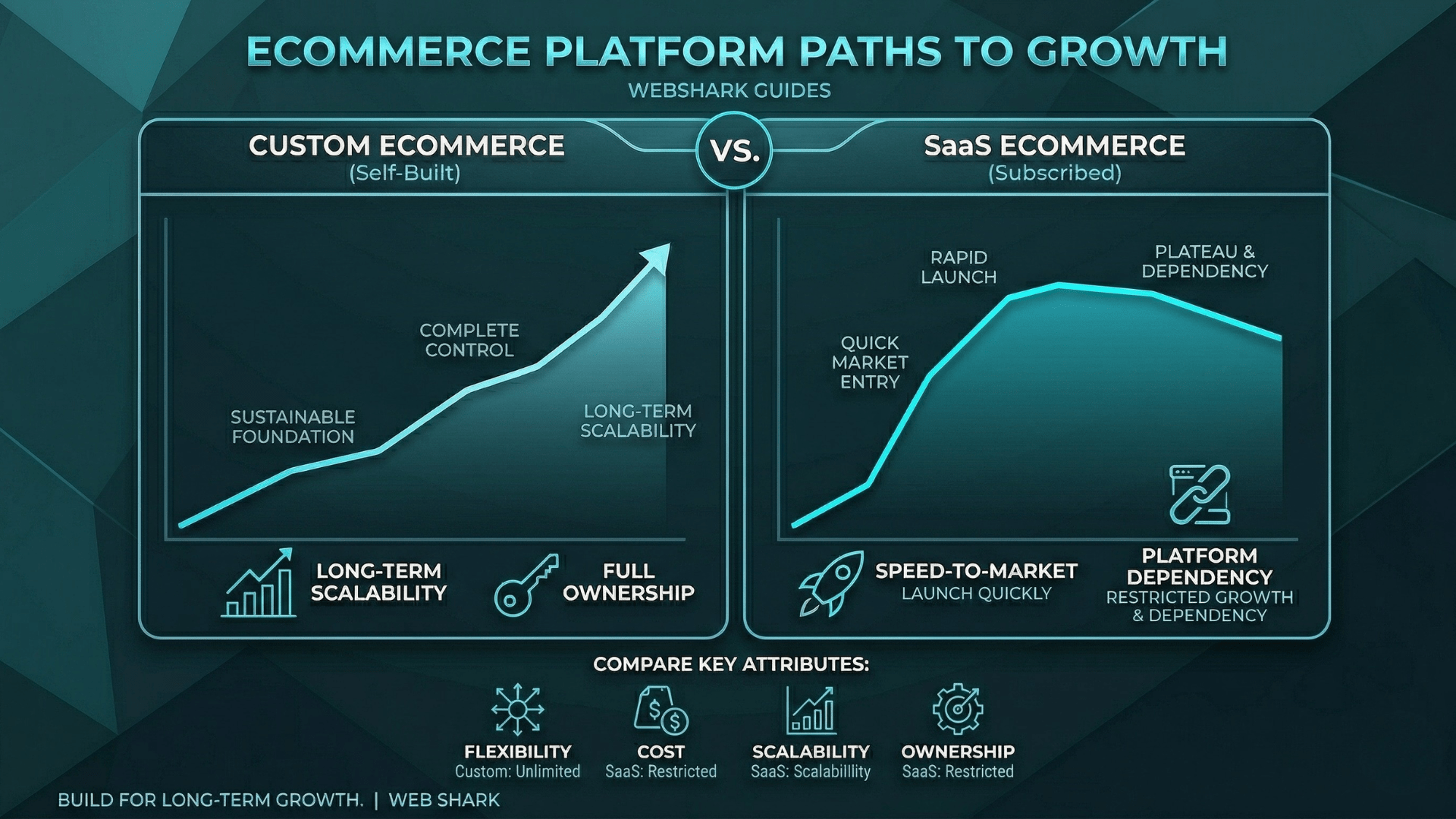
| Feature | SaaS Ecommerce | Custom Ecommerce |
| Setup | Fast | Time-intensive |
| Cost | Low initially | Higher upfront |
| Flexibility | Limited | Unlimited |
| Scalability | Restricted | Highly scalable |
| Ownership | Platform-controlled | Fully owned |
The Real Problem: Why SaaS Platforms Start Failing
SaaS platforms work well in the beginning.
But as your business grows—especially in supplements or wellness—you start noticing issues.
Common SaaS Ecommerce Limitations
- Slow performance during traffic spikes
- Limited checkout customization
- Poor SEO flexibility
- High dependency on apps
- Increasing monthly costs
- Difficulty scaling subscriptions
These are key disadvantages of SaaS ecommerce.
Why is this problem increasing?
Modern ecommerce is evolving rapidly.
Customers expect:
- Fast-loading websites
- Personalized experiences
- Subscription-based purchasing
- Trust-driven design
At the same time, businesses are scaling aggressively and running performance marketing campaigns.
To stay updated with these trends, you can explore insights on Webshark Blogs and understand what works in modern ecommerce.
How does it affect your business growth?
Think of your ecommerce platform like your foundation.
If it is limited, your growth will be restricted.
Business Impact:
- Low conversion rates
- High cart abandonment
- Weak SEO rankings
- Poor user experience
- Limited scalability
This is why many brands start searching for when to switch from Shopify to a custom platform.
SaaS vs Custom E-commerce Pros and Cons
Advantages of SaaS Ecommerce
- Quick launch
- Beginner-friendly
- Lower initial investment
- Built-in hosting
Disadvantages of SaaS Ecommerce
- Limited customization
- Scaling issues
- Platform dependency
- App overload
Benefits of a Custom Ecommerce Platform
Here’s why growing brands prefer custom solutions:
Key Benefits:
- Complete control over design and user experience
- Advanced SEO capabilities
- High-speed performance
- Scalable infrastructure
- No third-party dependency
- Custom checkout and funnels
These are strong custom ecommerce development advantages.
Shopify vs Custom Website: What’s Better?
This is a common question among business owners.
Shopify is ideal for:
- Beginners
- Small businesses
- Quick launches
Custom ecommerce is ideal for:
- Scaling brands
- High-growth businesses
- Subscription-based products
- Complex product catalogs
This makes Shopify the best ecommerce platform for scaling a business.
WooCommerce vs Custom Ecommerce
WooCommerce is often considered a middle-ground solution.
Pros:
- More flexibility than SaaS
- Lower cost than custom
Cons:
- Plugin dependency
- Slower performance at scale
For serious scaling, businesses move towards enterprise ecommerce solutions.
Custom Ecommerce Cost vs SaaS
Understanding cost is important.
SaaS Costs:
- Monthly subscription
- Transaction fees
- Paid apps
Custom Ecommerce Costs:
- Higher initial investment
- Lower long-term cost
SaaS is cost-effective initially, while custom becomes more profitable as you scale.
When Should You Move from SaaS to a Custom Platform?
Here are clear indicators:
- You are generating consistent revenue
- Your site performance is slowing down
- You need advanced funnels
- You rely heavily on paid advertising
- Your platform feels restrictive
This is when businesses transition to custom ecommerce for scaling brands.
Headless Ecommerce Solutions: The Future
Modern custom platforms are now built using headless ecommerce architecture.
This allows:
- Faster performance
- Greater flexibility
- Better user experience
A Sustainable Approach to Ecommerce Growth
Just like a strong foundation is essential for long-term health, your ecommerce platform must be built to support growth.
Custom ecommerce provides long-term stability and scalability.
Role of Supplement Brands in Ecommerce Evolution
Supplement businesses require:
- Trust-building landing pages
- Scientific positioning
- Subscription models
- High-converting funnels
SaaS platforms often struggle to meet these requirements effectively.
Key Elements of a High-Converting Ecommerce Platform
A successful ecommerce platform includes:
- Fast loading speed
- Mobile-first design
- SEO optimization
- Smooth checkout experience
- Personalization features
- Conversion-focused design
How to Choose the Right Ecommerce Platform?
Consider the following:
- Do you need speed or scalability?
- Is your business simple or complex?
- Are you planning long-term growth?
If you are targeting international markets, working with an Ecommerce Website Development Company in USA can provide a strong advantage.
Lifestyle Tips for Ecommerce Success
Beyond the platform, focus on:
- Strong branding
- Clear messaging
- High-quality product pages
- Customer trust signals
- Consistent marketing efforts
If You Are Selling Supplements
Your audience expects:
- Safety
- Natural solutions
- Proven results
Your website must reflect trust, clarity, and credibility.
If you are looking for a sustainable way to scale your supplement business, a custom ecommerce platform can significantly improve your performance.
FAQ Section
1. What is SaaS ecommerce?
A ready-made platform like Shopify, where you pay monthly to operate your store.
2. What is a custom ecommerce platform?
A fully customized ecommerce solution designed according to your business needs.
3. Which ecommerce platform is better?
SaaS is suitable for beginners, while custom platforms are ideal for scaling businesses.
4. When should you move from SaaS to custom platform?
When you face limitations in scalability, performance, or customization.
5. Is custom ecommerce better than Shopify?
For long-term growth, flexibility, and control, custom ecommerce is a better choice.
Conclusion: Build for Long-Term Growth
SaaS platforms are effective for starting an ecommerce business.
However, they are not designed for long-term scalability.
If you aim to build a strong and sustainable ecommerce brand—especially in the health and wellness space—you need:
- Full control
- High performance
- Scalability
Custom ecommerce platforms provide all these advantages.
Final thought: focus on building a system that supports your long-term growth, not just a store.