

Introduction
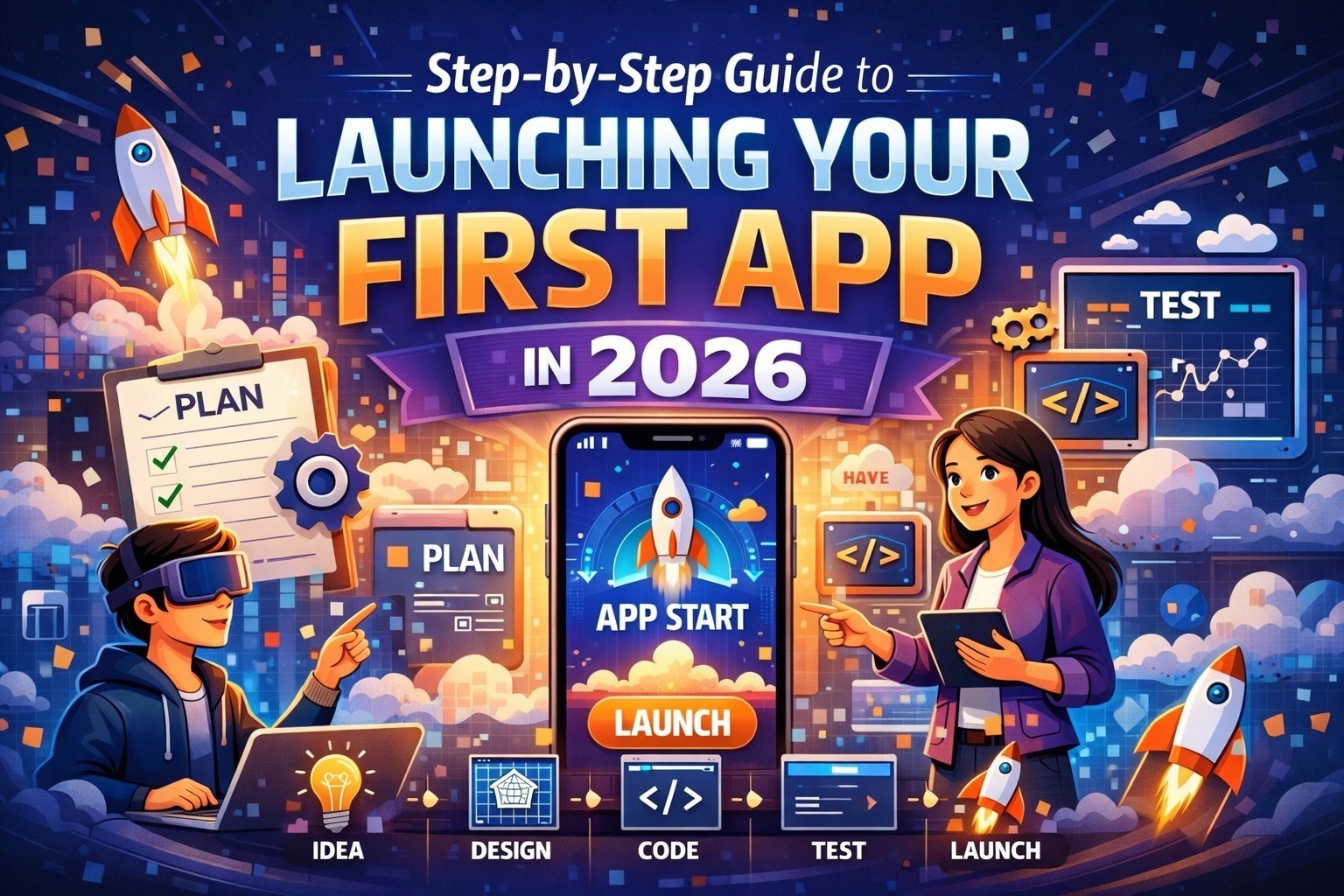
Launching your first mobile application can feel overwhelming, but with the right roadmap, you can turn your innovative idea into a successful product. Whether you’re an entrepreneur with a groundbreaking concept or a business looking to expand your digital presence, this comprehensive guide will walk you through every stage of bringing your app to life in 2026.
Understanding the App Development Landscape
The mobile app industry continues to evolve at lightning speed. In 2026, users expect seamless experiences, lightning-fast performance, and intuitive interfaces. Before diving into development, it’s crucial to understand that creating a successful app requires more than just a good idea—it demands strategic planning, skilled execution, and ongoing optimization.
Step 1: Define Your App Concept and Target Audience
Every successful app starts with a clear vision. Begin by asking yourself fundamental questions: What problem does your app solve? Who will use it? What makes it different from existing solutions?
Conduct thorough market research to validate your idea. Study your competitors, identify gaps in the market, and understand your potential users’ pain points. Create detailed user personas that include demographics, behaviors, preferences, and challenges. This groundwork will guide every decision you make throughout the development process.
Document your app’s core features and prioritize them. Resist the temptation to build everything at once. Instead, focus on creating a Minimum Viable Product (MVP) that delivers your app’s essential value proposition. You can always add advanced features based on user feedback after launch.
Step 2: Choose the Right Development Approach
Deciding between native, hybrid, or cross-platform development significantly impacts your app’s performance, budget, and timeline. Native apps offer superior performance and user experience but require separate development for iOS and Android. Cross-platform frameworks like Flutter and React Native allow you to build for multiple platforms simultaneously, reducing costs and development time.
Consider partnering with a Mobile app development company in USA that understands the latest technologies and trends. The Best Mobile app development company in USA will guide you through this decision based on your specific requirements, target audience, and budget constraints.
Step 3: Design an Intuitive User Experience
User experience (UX) and user interface (UI) design are make-or-break factors for app success. Users abandon apps that are confusing, cluttered, or difficult to navigate. Invest time in creating wireframes and prototypes before writing a single line of code.
Focus on simplicity and clarity. Every screen should have a clear purpose, and navigation should feel natural. Follow platform-specific design guidelines—Material Design for Android and Human Interface Guidelines for iOS—to ensure your app feels familiar to users.
Test your designs with real users through usability testing sessions. Gather feedback, iterate on your designs, and refine the user journey until it’s smooth and intuitive.
Step 4: Find the Right Development Partner
Unless you have an in-house development team, selecting the right development partner is one of your most critical decisions. Look for a Top Mobile app development company in USA with a proven track record, diverse portfolio, and expertise in your industry.
Webshark Corporation stands out as a trusted partner for businesses launching their first apps. With extensive experience in cutting-edge technologies and a client-centric approach, they transform concepts into market-ready applications. When evaluating potential partners, review their past projects, read client testimonials, and assess their technical capabilities.
Schedule consultations with multiple companies to discuss your project requirements, timeline, and budget. A reliable development partner will ask probing questions about your business goals, offer strategic insights, and provide transparent pricing structures.
Step 5: Build Your MVP
With your development partner selected, it’s time to build your MVP. This phase involves transforming designs into functional code, integrating necessary APIs, and setting up backend infrastructure.
Implement an agile development methodology that allows for flexibility and iterative improvements. Regular sprint reviews ensure the project stays on track and aligned with your vision. Maintain open communication with your development team, providing feedback and clarifying requirements as needed.
During development, prioritize app security from the ground up. Implement encryption for sensitive data, secure authentication methods, and follow best practices for API security. Data breaches can destroy user trust before your app even gains traction.
Step 6: Conduct Rigorous Testing
Quality assurance (QA) cannot be an afterthought. Comprehensive testing identifies bugs, performance issues, and usability problems before they reach your users. Your testing strategy should include functional testing, performance testing, security testing, and compatibility testing across different devices and operating systems.
Beta testing with real users provides invaluable insights. Recruit a diverse group of beta testers who represent your target audience. Collect their feedback systematically, noting both technical issues and user experience concerns. Use this feedback to refine your app before the public launch.
Step 7: Optimize for App Stores
App Store Optimization (ASO) is the SEO of the app world. Your app’s visibility in the App Store and Google Play Store directly impacts download numbers. Craft a compelling app title that includes relevant keywords while remaining clear and memorable.
Write a detailed app description that highlights key features and benefits. Use all available characters in your short description to capture attention. Include high-quality screenshots and an engaging preview video that showcases your app’s functionality and value proposition.
Choose the right category and subcategories for your app. Research keywords that your target audience searches for and incorporate them naturally into your metadata. Monitor your ASO performance and adjust your strategy based on ranking data and conversion rates.
Step 8: Prepare Your Marketing Strategy
Launching without a marketing strategy is like opening a store in a hidden alley—no one will find you. Start building anticipation before launch day. Create a landing page that collects email addresses from interested users. Share sneak peeks on social media platforms where your target audience congregates.
Consider a soft launch in select markets to test your marketing messages and gather initial user feedback. Leverage influencer partnerships, press releases, and content marketing to generate buzz. Paid advertising on social media and search engines can accelerate user acquisition, but ensure your targeting is precise to maximize ROI.
Step 9: Launch and Monitor Performance
Launch day is exciting, but it’s just the beginning of your journey. Submit your app to the App Store and Google Play Store, ensuring you’ve met all requirements and guidelines. Rejection can delay your launch, so double-check everything before submission.
Once live, monitor your app’s performance using analytics tools. Track key metrics including downloads, active users, session length, retention rates, and crash reports. Set up crash reporting tools like Firebase Crashlytics or Sentry to identify and fix issues quickly.
Respond promptly to user reviews, both positive and negative. Addressing concerns publicly demonstrates your commitment to user satisfaction and can turn frustrated users into loyal advocates.
Step 10: Iterate Based on User Feedback
The most successful apps evolve continuously based on user behavior and feedback. Analyze usage data to understand which features users love and which they ignore. Conduct user surveys to gather qualitative insights about desired improvements.
Plan regular updates that introduce new features, enhance existing functionality, and fix bugs. Keep users informed about updates through in-app notifications and update notes. Maintaining momentum with consistent improvements keeps your app relevant and engaging.
Navigating Technical Decisions
Throughout development, you’ll face numerous technical decisions that impact your app’s long-term success. Choose scalable backend solutions that can grow with your user base. Consider cloud platforms like AWS, Google Cloud, or Microsoft Azure for reliable infrastructure.
Implement push notifications strategically to re-engage users without becoming annoying. Integrate analytics from day one to make data-driven decisions. Consider offline functionality for features that don’t require real-time data, improving user experience in areas with poor connectivity.
Understanding Development Costs
Budget planning is essential for first-time app launchers. Development costs vary dramatically based on complexity, features, platforms, and your chosen development partner. Simple apps with basic functionality might cost between $25,000 and $50,000, while complex apps with advanced features can exceed $200,000.
Working with Webshark Corporation ensures transparent pricing without hidden costs. They provide detailed project estimates that break down development phases, helping you allocate resources effectively and avoid budget surprises.
Legal and Compliance Considerations
Don’t overlook legal requirements when launching your app. Develop comprehensive privacy policies and terms of service that comply with regulations like GDPR, CCPA, and other regional data protection laws. If your app targets children, ensure COPPA compliance.
Secure necessary intellectual property protections for your app concept, name, and logo. Consider trademarking your brand name to prevent future conflicts. If your app handles payments, ensure PCI DSS compliance to protect financial data.
Building for Long-Term Success
Think beyond launch day. Successful apps require ongoing maintenance, updates, and marketing efforts. Budget for continuous development, server costs, customer support, and marketing campaigns. Plan your monetization strategy carefully—whether through in-app purchases, subscriptions, advertising, or premium features.
Build a community around your app. Engage users through social media, email newsletters, and in-app messaging. Create content that provides value beyond the app itself, positioning your brand as an authority in your niche.
Partnering with the Right Team
Choosing the right development partner can make the difference between a successful launch and a costly failure. Webshark Corporation, recognized as a leading Mobile app development company in USA, brings technical expertise, strategic thinking, and dedication to client success. Their comprehensive approach covers everything from initial concept validation through post-launch support, ensuring your app achieves its full potential.
Conclusion
Launching your first app in 2026 is an exciting journey filled with challenges and opportunities. By following this step-by-step guide—from initial concept through post-launch optimization—you’ll position your app for success in the competitive mobile marketplace.
Remember that app development is not a linear process. Be prepared to adapt, iterate, and learn from both successes and setbacks. With careful planning, the right development partner, and unwavering commitment to user experience, your app can stand out in crowded app stores and deliver real value to users.
The mobile app revolution continues to reshape how we live, work, and connect. Your innovative idea could be the next breakthrough that changes lives and builds a thriving business. Take that first step today, and transform your vision into reality with confidence and strategic execution.